It's an opportunity to captivate a global audience with reflections from the next generation.
Eco - Girl design by Fernanda, 13 years old
About the challenge
Imagine the vastness of the ocean, the mesmerizing dance of marine life, the resilient stories of indigenous communities, and the undying call to preserve this blue wonder. Now, picture the voices of our children echoing their sentiments, dreams, and hopes through art, and making a resonant mark at none other than COP28.
This initiative is not just a contest, but a platform for young visionaries under the age of 18 to manifest their perspectives on the monumental effects of climate change on our oceans.
Eco-girl
For Fernanda Eco-girl means a girl without plastic.
She offers reusable pads because they are durable and eco-friendly and have a positive impact on the environment.
Reusable cloth pads can be washed and reused for several years, reducing the amount of waste produced.
Problem:
Ocean plastics are known to kill millions of marine animals every year. Nearly 700 species are affected by plastic pollution. Menstrual product waste is also a significant contributor to this plastic pollution that harms the ocean.
Microplastics are deadly when consumed by sea animals.
Both macro and microplastics are part of the majority of the sanitary pads that everyone uses. Regular single-use sanitary pads contain nearly 90% of plastics which would take 500-800 years to decompose and even when they do break down, they will just turn into microplastics.
The founder of Startup Talentos Multiplus, Sofonie Dala attended the 1st National Youth Forum on climate change - preparation for COP28
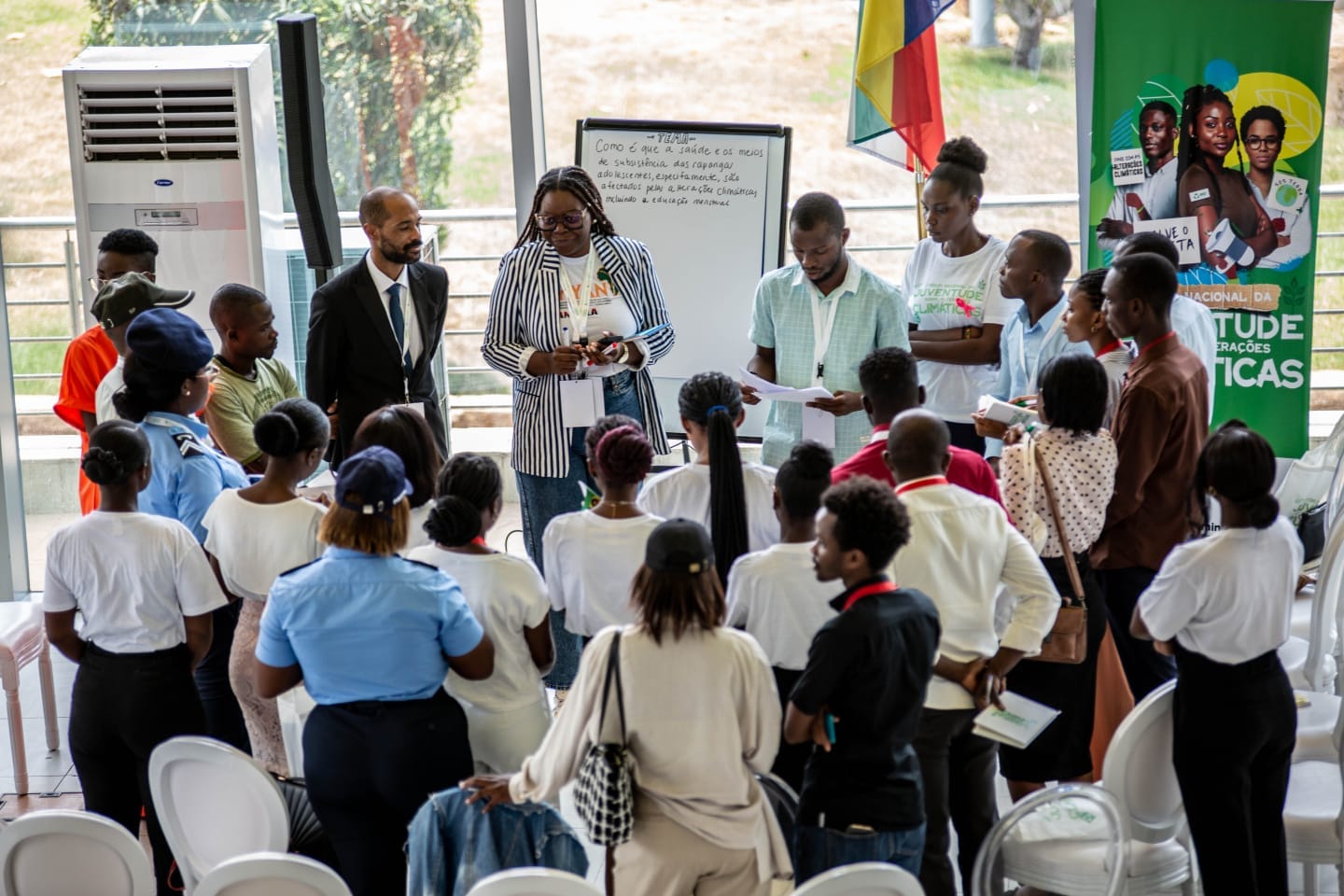
The National Youth Forum on Climate Change took place on the 18th and 19th of October 2023, where Sofonie Dala participated as an active voice of Angolan youth.
The topics discussed there were so familiar to the Female Entrepreneur that made her feel like a fish swimming in the sea. Sofonie Dala made significant contributions to this forum, she actively participated in discussions, shared her knowledge and projects focused on empowering girls, mitigating climate change and achieving the SDGs.
Furthermore, she also shone on stage by answering the SDG quiz with excellence.
Speech by Sofonie Dala
Hello world, I'm Sofonie Dala.
We are taking part in the 1st National Youth Forum on Climate Change.
Here we are witnessing young people having their voices heard, participating in discussions, workshops, round tables and quizzes as their ideas, opinions, thoughts and innovative solutions will be part of the report that Angola will present at COP28, which will soon take place in Dubai.
We also discussed gender equality and women's empowerment and how climate change negatively affects girls.
These are very important and interesting topics that were debated here and we hope that this is not the first nor the last forum of this nature, we hope that there will be more forums and that more young people will have the opportunity to participate.
The plastic menstrual pads we use can cause serious damage to the environment, and take thousands of years to decompose.
Our idea was welcomed and many liked it. So there is a huge need to end the bureaucracy that has been preventing startups from taking their ideas further. We ask governments and all entities to stop placing obstacles in young people's initiatives, because young people are the engines of change.
The event was marked by round tables where young people were able to delve deeper into various topics such as: The impact of climate change on young people;
Employment, entrepreneurship and green skills and climate engagement.
The event that brought together several young people was organized by the Ministry of Environment and Youth and Sports with the support of UNICEF, and is part of a set of activities that Angola carries out in preparation for COP28.
The activity that brought together leaders from the National Assembly, UN agencie, Ministries of the Environment, Youth and Sports, defense and security bodies and young people from various sectors of civil society, took place at the Paz Flor Cultural Center, and aimed to provide young Angolans with information and knowledge about climate change to facilitate preparedness for climate change-related risks and opportunities.
For two days topics such as: the transmission of messages about the main climate changes; what are the main threats that Angola is facing and needs to mitigate in the coming years, consultation with young people in preparation for COP28; and others, were presented and discussed during the event.
“There is no sustainable development without the involvement of young people”, said Zahira Virani, the United Nations Resident Coordinator in Angola.
This event will serve as a precursor to Angola's participation in the Conference of the Parties (COP 28), elevating the Voice of Angolan Youth on this topic of national and global relevance”, as highlighted by the Minister of the Environment, Ana Paula de Carvalho Pereira, in her opening speech.
Sofonie Dala had the opportunity to interact with exhibitors at the venue
This young man is exhibiting their project on ecological gases using the Neutronics Ultima ID Pro device, which is used for analyzing refrigeration gases. The result must be exactly the indicator of the gas under examination, which is R22 or R410 and if the result is different it means that we are commiting an infraction.
The Neutronics Ultima ID Refrigerant Identifier will provide a fast, easy and accurate means to determine refrigerant purity in refrigerant storage cylinders or directly in vehicle air conditioning systems.
This young man is representing the OTCHIVA organization that works on the plantation. protection and restoration of Mangroves. OTCHIVA MANGAIS is a project to protect and restore mangrove wetlands.
Did you miss the forum?Click here and watch the videos below
Making cotton fair and sustainable for all: from farm to fashion - Reusable pads "Ladies without plastic"
Hello World!
Welcome to our platform.
My name is Sofonie Dala, and today we are going to talk about World Cotton Day, celebrated on October 7th annually.
With the theme “Making cotton fair and sustainable for all: from farm to fashion”, we are taking this opportunity to present our project "Ladies Without Plastic" - reusable sanitary pads (also called cloth sanitary pads, cotton sanitary pads and washable sanitary pads) to eliminate waste, as they can be reused, and can save up to 150kg of plastic waste from entering the landfills per person.
Our reusable pads are eco-friendly, affordable and sustainable, allowing women and girls to always have access to safe menstrual protection, and help protect the environment, create a small income for themselves and their families by selling their extra products at the market.
Useful conversation between mother and daughter
Good afternoon.
Good afternoon, thank you.
Did you know that today is world cotton day?
World cotton day? I didn't know.
Yes, every year on October 7th we celebrate World Cotton Day
What can we do with cotton?
We can do many things. We can make these "Ladies without Plastic" reusable menstrual pads to protect the environment.
Alright.
We can also make clothes, shoes and lots of good things, as well as other reusable and sustainable products.
As you can see, this menstrual pad is reusable and sustainable, we can wash it, hang it on the thread and at the same time protect the environment. They are very good and easy to use.
Isn't it an added value?
Yes, this is worth using it.
Better access to education and work
Lack of access to menstrual products has both short and long-term repercussions for women, girls and people who menstruate.
Period poverty, including the stigma that often surrounds menstruation, stops many people from going to school or work, leading them to miss out on their education or vital income to support themselves and their families.
In the long run, a lack of education can have several devastating impacts on a girl's life, including the possibility of child marriage, early pregnancy and vulnerability to violence and abuse.
Weaving a better future for cotton
Cotton is one of the most common fabrics in our wardrobes. It is comfortable, hypoallergenic, breathable and durable.
But cotton represents so much more than just a commodity. This natural fabric is a life-changing product worldwide that sustains 32 million growers (almost half of them women) and benefits over 100 million families across 80 countries in 5 continents.
This means that, behind any cotton clothing, following back its trade chain, there is a personal story.
It is true that cotton is really important to developed economies, but for least-developed and developing countries, it is a safety-net.
Cotton is a major source of livelihoods and incomes for many rural smallholders and laborers, including women, providing employment and income to some of the poorest rural areas in the world.
On third official UN World Cotton Day,under the theme “Making cotton fair and sustainable for all: from farm to fashion”, the United Nations wants to raise visibility of the cotton sector and awareness of the critical role that it plays in economic development, international trade and poverty alleviation.
The observance also aims to highlight the importance of sustained, inclusive and sustainable economic growth, full and productive employment and decent work for all.
World Cotton Day, an idea that started thanks to the “Cotton Four”
The initiative of World Cotton Day was born in 2019, when four cotton producers in sub-Saharan Africa– Benin, Burkina Faso, Chad and Mali, known as the Cotton Four -proposed the World Trade Organization a World Cotton Day celebration on October 7.
During 2 consecutive years, the date offered an opportunity to share knowledge and showcase cotton-related activities.
Now that the United Nations has officially recognized this World Cotton Day, this great opportunity creates awareness of the need of market access for cotton and cotton-related products from least developed countries, fosters sustainable trade policies and enables developing countries to benefit more from every step of the cotton value chain.
A rules-based, non-discriminatory, open, fair, inclusive, predictable and transparent international cotton trading system is key to provide a livelihood to hundreds of millions of vulnerable people around the globe.
Besides, greater investments are needed to expand the sector beyond raw cotton production and create new income opportunities, especially for farmers, by adding more value to cotton fibre and developing by-products from other parts of the cotton plant.
UN agencies have worked years towards this mission. For instance, the International Trade Centre (ITC) and the World Trade Organization (WTO) have helped C-4 to optimize production and improve local processing capacity, as well as to discuss the trade reforms needed to address high trade barriers and inequalities for cotton producers in developing countries. These efforts date back to 2003 through the Cotton Initiative.
Another UN agency, FAO, has long offered developing countries technical and policy support for boosting productivity and creating more opportunities in the cotton value chain. As an example, the +Cotton project, a cooperation initiative with Brazil (another leader in the industry) that helps Latin American producers to introduce innovative farming methods.
Let's keep working on offering the assistance to the cotton sector in developing countries to keep increasing productivity, investment and bring innovation and sustainable standards to increase the benefits of the cotton sector worldwide.
Take urgent action to combat climate change and its impacts
The Sustainable Development Goal 13 (SDG 13 or Global Goal 13) is to limit and adapt to climate change. It is one of 17 Sustainable Development Goals established by the United Nations General Assembly in 2015.
The key role of decent work for all in achieving sustainable development is highlighted by Sustainable Development Goal 8 which aims to “promote sustained, inclusive and sustainable economic growth, full and productive employment and decent work for all”.
Did you know?
A single tonne of cotton provides year-round employment for 5 people on average, often in some of the most impoverished regions.
Cotton-based filaments are appealing to 3D printers because they conduct heat well; become stronger when wet; and are more scalable than materials like wood.
In addition to its fibre used in textiles and apparel, food products can be derived from cotton, such as edible oil and animal feed from the seed.
.jpg)
.jpg)

.jpg)
.jpg)
.jpg)
.jpg)
.jpg)
.jpg)
.jpg)
.jpg)
.jpg)
.jpg)
.jpg)


.jpg)
.jpg)




.jfif)
.jfif)
.jfif)
.jfif)


