Friday, 5 May 2023

Ladies Without Plastic to address climate change through the Fashion and Art

 Fashion and Art in defence of the environment


Ladies and Gentlemen.

Welcome everyone to our Startup Talentos Multiplus. My name is Sofonie Dala, I'm the founder of this non-profit digital startup that creates awareness on the sustainable development goals (SDGs).

Today we are here to talk about one of our most successful projects "Ladies without Plastic".


What is "Ladies Without Plastic"?


"Ladies Without Plastic" is a reusable menstrual pad made of cotton and cloth that aims to mobilize women to change plastic pads that pollute the environment causing climate change. We strongly recommend women to start using our reusable sanitary pads, which do not pollute the environment but reduce the pollution and is also much more cost effective..

This project aims to help reduce the high levels of unemployment in our country, by producing reusable products on a large scale so that more women can have access to these products, and together we can end the period of poverty.  We seek to create partnerships with governments, private organizations and other institutions in order to receive financial support.

Through our projects we fight against climate change and environmental pollution, empowering, mobilizing youth, women and girls with non-formal sustainable development training.

This business model, in addition to being educational, also has a very beautiful fashion style. This style intrigues women and makes them very thoughtful. By reading Ladies Without Plastics, they will be learning that plastics pollute the environment.

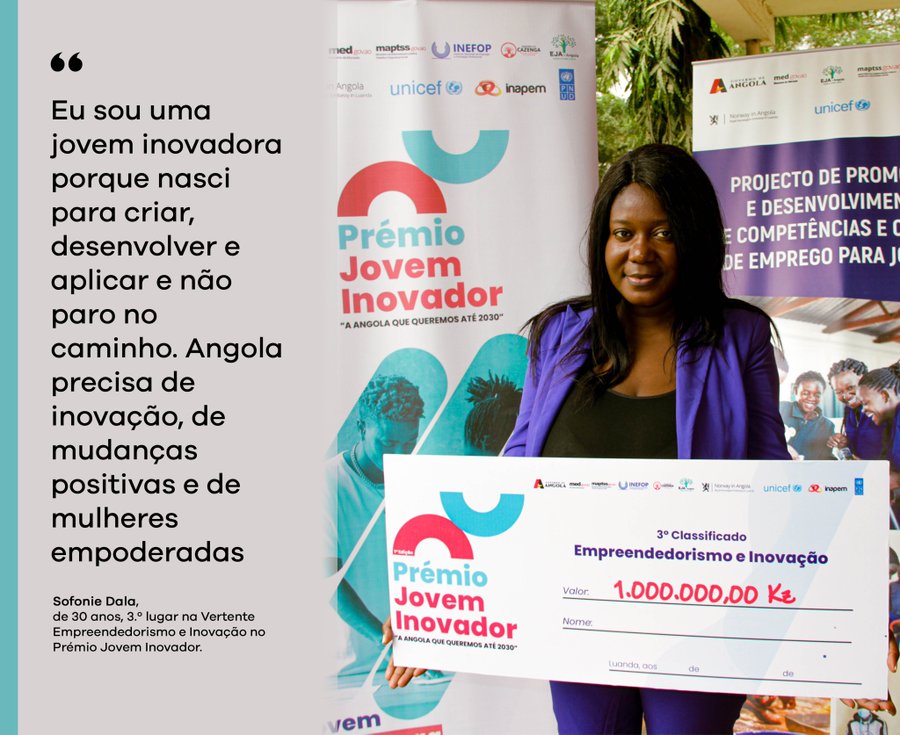
In 2022 we won the third place in the Young Innovator Award competition. We were happy with the prize of a 1000.000, 00 Angolan kwanzas, which helped us to buy at least one sewing machine.


 Unfortunately, it was not enough for us to reach all project goals.


The project needs more support and sponsorships to move up to the next stage which is the implementation and expansion of the project. We have at the top of our agenda the recruitment of some girls and women, since this project not only aims to reduce environmental pollution but also to reduce poverty and unemployment among girls and women.


Learn more: https://ladies-without-plastic.blogspot.com/2022/07/congratulations-we-won-1st-edition-of.html


Therefore, we need more financial resources to support those women and girls who will be producing these menstrual pads. We will also be offering capacity building trainings to equip them with the skills needed for them to get ahead and not be totally dependent on the company. These trainings will help them produce and distribute pads in their communities and neighborhoods that will allow them to generate income for themselves.


We also continue organizing community campaigns to make people aware of the importance of achieving the 17 sustainable goals of the United Nations.

For this project we have already bought a machine, but we have not been able to buy other necessary equipment to continue our project.


These plastic pads that are sold in supermarkets are very expensive and not every woman has the possibility to buy them. It has been a great challenge for a poor mothers with many daughters.


As a solution, we developed Ladies Without Plastic menstrual pad, which is more durable and cheaper. Some women will be able to resell and earn their income.


The United Nations General Assembly passed a resolution to proclaim March 30 as International Day of Zero Waste every year, and 105 countries have adopted it so far. During this time, UN member states, civil society, the private sector, academia, the youth and other stakeholders are invited to raise awareness of all available zero-waste and waste-management initiatives in the hope that we could come together to eliminate the problem entirely.

In order to make a change, we need to promote circular consumption systems, where the resources at each step of the product's life cycle are reused and recovered. This can significantly minimise damage to our air, land and water. 


Industries should contribute by making products more durable and costing fewer low-impact materials. Manufacturers could also opt for less resource-intensive production and transportation methods.


"Zero-waste initiatives can foster sound waste management and minimise and prevent waste, helping to address the triple planetary crisis, protect the environment, enhance food security and improve human health and well-being," the UN note outlines.


We support the SDG4 - quality education and will be keeping offering capacity building training to equip young women with skills to face climate change, especially those living in the most affected areas.


INTERVIEW


Hello!

Hello.

How are you?

I am fine. And you?

Great!

What is your name?

Edvania.

Pleasure to meet you.

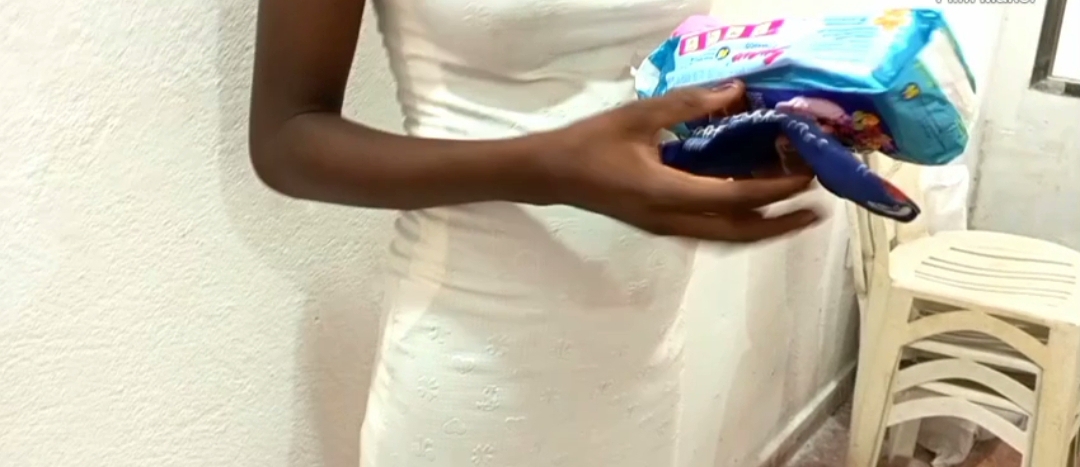
Edvania, what do you have in your hands?

I have 2 types of sanitary pads.

Do you always use these pads?

Yes.

Which one do you use the most?

I always use the plastic sanitary pad, but the cloth one I've used a few times.

How have you been using them?

Well, the cloth one is reusable, I can use it several times, but the plastic one is disposable, it is used only once.

What was your experience with the cloth pad?

It has been more economical for me, but the plastic one you always will need money to buy it.


Sustainable music

Let's use the reusable one, plastic-free ladies

Let's use the reusable one, plastic-free girls

Protect the environment, limit pollution,

Let's use the reusable pad, ladies without plastic!


We, as startups, will start promoting environmental awareness campaigns even more strongly in order to educate and help people reduce their carbon footprint on the environment.


Learn more about our work

https://linktr.ee/sofoniedala

Sunday, 25 December 2022

Fraudulent competition - Angola Education Awards - SCIENTIST OF THE YEAR / BEST SCIENTIFIC RESEARCH PROJECT

 Fraudulent competition - Angola Education Awards 


Results of the fraudulent competition


 Greetings friends. 

Thank you for voting. Engineer Sofonie Dala, based on the results, won the competition with the majority of votes, but she was being a victim of fraud, this started from the beginning of the competition.

Apparently, the organizers of this event lack knowledge and high skills to evaluate candidates in different areas of knowledge.

The end of this competition was very ugly, painted with theft, dishonesty, corruption, nepotism, lack of transparency, misinformation, slander and favoritism.


We first received a message that we were approved. The following days we received a false and fraudulent message saying that they thought again and decided to give our place to their favorites ones who were unable to win the competition.


From the beginning of the competition, the organizers tried in any way to obscure the strong candidates, putting only a simple description of their profile and achievements, while their affiliates had a full biography.


We also noticed that very important information about Sofonie Dala's research, discoveries and achievements were hidden by the organizers and it was clear that they did this out of spite.


We wrote official complaints about the harm they caused us. To date we have not received any response.


This organization is not serious.

Unsustainable competition and a waste of time.


These types of abusive behavior always happen in competitions organized by Africans, these are one of the reasons that make us lose interest in participating in competitions where the committee is completely made up of Africans.


We need to put an end to these harmful practices in competitions. It is unacceptable to lose opportunities because of envious people.


ATTENTION - FRAUD

URGENT INTERVENTION NEEDED 


Did you know?


The same injustice happened with our hybrid learning platform "She Leads Angola".


We also submitted this platform to compete in the category of best education, science and technology portal, fortunately at the beginning of the month we received a notification saying that we had successfully passed to the next phase, they asked us to send our portal's logo, we didn't hesitate we sent our logo immediately the next day, still within the deadline. A few days later, after they realized that our platform has the potential to win the contest, we received another false message saying that at the weekend the judges sat down and decided to put our portal out of the competition and decided to give priority to their favorites and affiliates. from them. Consequently, they removed our portal from the list.


It is a lie, they stole our place.


What type of crime is that?

Dear all, we are dealing with very serious fraud, we are dealing with highly dangerous professionals.

Another important detail that we find suspicious is the change in the email that was used to submit the applications. Engineer Sofonie Dala used her work email to submit our platform "She Leads Angola, but when they sent the announcement about the selection of our portal they used her other personal email that she used to apply in the category of, "scientist of the year".


That's when we discovered something wasn't clean.

Of course we protested when they sent that second fraudulent email. They just ignored it and didn't respond.


That's how this dishonest game began, accompanied by persecution.


Another mistake is that they did not send any notification to participants confirming that their application was submitted successfully.

In case of fraud the participant wouldn't have any proof confirming that he had submitted something.


That's why Angola and other African countries are the way they are.

VOTE FOR SOFONIE DALA, CLICK ON THE LINK BELOW, YOU WILL NEED TO SIGN IN WITH YOUR GMAIL ACCOUNT TO VOTE.

https://docs.google.com/forms/d/e/1FAIpQLSeP4StZZhnAjVBnljgLX-vxyj9jHJ0HF0VJ8rLMtHIdKtJ86A/alreadyresponded

We are happy to see our founder Sofonie Dala on the list of Young Scientists of Angola, and we are even prouder that she is the only female candidate on the list.


This means that gender disparity remains a major problem in Angola. We need to balance this picture, we need to end gender inequality in the country and so that in the next editions more women scientists appear on the list.


THIS IMAGE PERFECTLY SHOWS THE GENDER DISPARITY IN SCIENCE

Gender inequality in science
How should a better gender balance be achieved?

Why are women underrepresented in many areas of science, technology, engineering, and mathematics (STEM)? This is a question with no easy answers. In science, as in many areas of life, bias against women exists, but researchers disagree on how much bias matters: Some suggest that the effects of bias accumulate over time to shape careers, whereas others argue that gender differences in preferences are much more important. However, it is likely impossible to disentangle the effects of societal bias and individual preferences, because people's understanding of gender differences shape their preferences. 


Thursday, 6 October 2022

Advancing Climate Justice Through the SDGs - The Transformation of Education Begins with Teachers. By Sofonie Dala, Angola

 Commemorating the Second Anniversary of Africa Educates Her Campaign, Angola

Ladies Without Plastic - Advancing Climate Justice Through the SDGs


Ladies and gentlemen,

Welcome to the 3rd edition of this extremely important educational documentary.

In this edition we are providing non-formal training in rural communities to advance climate justice through the SDGs.


Good afternoon!

Good afternoon!

How are you?

We're fine thank you!

How many of you have heard about climate change?

hmmm

Have you ever heard about climate change?

No.

And the environment?

Not either.

Never heard of the environment?

No, never.


Today we are going to talk about the importance you can have in protecting the environment. We will also talk about environmental pollution.

Did you know that plastic pollutes the environment?

We didn't know.

Seriously?

Hello! I am Sofonie Dala, we are here in rural communities to include people from this social group to participate in environmental protection ideas.

We will talk about the role these rural girls can play to protect the environment and we will also talk about the importance of reusable menstrual pads in the life of women and girls.

How many of you here already menstruate?

Both of us.

Take this. Have you ever heard about these types of sanitary napkins?

Yup.

What is this called?

Hmm absorbent.

These are reusable menstrual pads.

Do you use this type?

No no.

Girls what kind of menstrual pad do you use?

We use the plastic menstrual pad.

Did you know that plastic menstrual pads pollute the environment?

We didn't know.

Yes, plastic menstrual pads pollute the environment. We girls must be very careful with these products. Especially you little girls who haven't started menstruating yet. When you start menstruating, look for these washable and reusable pads.

Pay attention, reusable pads are better than plastic menstrual pads.

Plastic menstrual pads take many years to decompose, generate greenhouse gases and cause global warming.

Many girls miss school because they don't have the money to buy plastic menstrual pads which are very expensive.

That's why we should use reusable menstrual pads to protect the environment. In addition, they are also more economical and sustainable. They can last for 4 years and you won't have to spend money monthly to buy menstrual pads.

Let's all wear reusable menstrual pads to protect the environment.

What I have here is organic cotton, we bought this to be producing washable and reusable towels and distributing them free of charge to girls in rural communities. 


Taking pledge

Girls giving good testimonies of what they learned today.


Hello!

My name isTeresa, I'm 15 years old and I want to protect my menstrual health.

Before I was using plastic pads, now I will be using reusable menstrual pads, because I now know that plastic pads pollute the environment.


With these softer, reusable and washable pads, thousands of girls like Teresa will be able to stay in school and create a future for themsleves.


Ladies without plastic, I'm going to get rid of the plastic pads.


We advocate for behavioral change to reduce earth vulnerability to climate change and global warming from disposable sanitary pads, at the same time mobilizing women and girls to switch back to the use of reusable sanitary pads.

Our mission is to empower women who face extreme poverty to become self-sufficient and entrepreneurial by teaching them how to make the pads themselves and enabling them to turn their acquired skill into a business.


Children singing in chorus: Let's use reusable products.
Fight against climate change, let's all protect the environment!

No young girl should miss school because of her period! 


Every month, 1.8 billion people across the world menstruate. Millions of girls and women are by period poverty not only in developing countries but also in developed countries and millions of girls and women cannot attend school or work due to lack of menstrual products or clean sanitary facilities.


Monday, 15 August 2022

|UNDP Angola| Thank you for recognising our work!


Pelo Dia Internacional da Juventude, recordamos os vencedores do Prémio Jovem Inovador “A Angola que queremos até 2030”,do MAPTSS, PNUD e Sofonie venceu com o projecto “Mulheres Sem Plástico”, com produção de pensos reutilizáveis para combater a poluição ambiental
Image

https://twitter.com/UNDPAngola/status/1556977712723525632


“As pessoas que não acreditavam muito no meu trabalho, agora acreditam e eu creio que este prémio é uma porta aberta. Significou muito para mim e estou muito motivada.”

Na semana do Dia Internacional da Juventude, 12 de Agosto, recordamos os vencedores do Prémio Jovem Inovador “A Angola que queremos até 2030”, organizado pelo MAPTSS, PNUD e UNICEF Angola, com financiamento da Embaixada Real da Noruega em Angola.

Sofonie Dala, de 30 anos, ficou em 3.º lugar no Prémio Jovem Inovador “A Angola que queremos até 2030”, com o projecto “Mulheres Sem Plástico”, uma iniciativa ambiental e de empoderamento feminino, focada na “produção de pensos reutilizáveis, para mobilizar as mulheres a deixarem de usar os pensos de plástico, que contribuem para a poluição ambiental e alterações climáticas”.
Activate to view larger image

Threads of Dignity: Stories of Women, Menstrual Health, and Shared Experiences in Angola

  Sewing Change, Sustaining Health Welcome to our page! My name is Sofonie Dala, founder of this initiative. We are proud to run a women’s p...